Nigeria’s persistent security challenges have taken a devastating turn, with armed gunmen killing well over 130 civilians in coordinated assaults on rural communities in Kwara, Katsina, and Benue states during a violent 48-hour period. These latest raids underscore the entrenched dangers posed by banditry, armed militias, and related militancy across Nigeria’s north-central and northwestern zones—areas long plagued by fragile state authority, widespread poverty, resource-based disputes, and cycles of retaliation that have claimed countless lives over recent years.
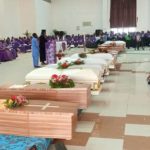
The deadliest strike occurred in Kwara State’s Woro community, located in Kaiama Local Government Area, where residents report at least 100 fatalities from a prolonged assault by bandits on Tuesday, February 3, 2026. Eyewitnesses described heavily armed assailants, many disguised in military uniforms, arriving on motorcycles around 5 p.m. and unleashing chaos that lasted until the early hours of Wednesday. They converged on a local secondary school before fanning out to burn houses, shops, and vehicles, while abducting women and children. By Wednesday, 75 bodies had been buried, with searches ongoing for more victims scattered in the surrounding bush. Some corpses were burned beyond recognition, affecting both Muslim and Christian residents.

Alhaji Salihu Bio Umar, the community head, confirmed the tragedy in a statement, revealing that two of his sons were among the dead. “They killed my children, burned my palace, and took my Highlander Jeep to transport the kidnapped,” he said. “We estimate about 100 people dead, with more bodies still in the bush.” The Emir of Kaiama, Alhaji Muazu Omar, corroborated the figures, noting that Governor AbdulRahman AbdulRazaq had arrived in the area to assess the damage. Reports also indicate the attackers detonated a landmine that destroyed a commercial truck.
Survivors like Dr. Abdul Woro and Idris Muhammed painted a grim picture of the ordeal. “This is the most devastating attack we’ve faced,” Dr. Woro told reporters, adding that men were primarily targeted for killing, while women and children were kidnapped. Muhammed echoed this, stating the bandits had regrouped after recent military operations in the nearby Kainji National Park axis, about 30 kilometers from Kaiama town and 35 kilometers from Wawa in Niger State’s Borgu LGA. The area, plagued by bandit hideouts in dense forests, has seen repeated clashes, including ambushes that forced the withdrawal of stationed soldiers.
In Katsina State, at least 21 people were killed in a separate raid on Doma village in Faskari Local Government Area, where gunmen went house-to-house, murdering residents and setting properties ablaze. This attack is suspected to be retaliation against recent air force strikes that neutralized 27 militants in the region.
Meanwhile, in Benue State, 17 individuals, including a mobile police officer, lost their lives when gunmen stormed Abande market in Kwande Local Government Area’s Mbaikyor Ward. The assailants opened fire on traders and shoppers, exacerbating the state’s long-standing issues with herder-farmer clashes and bandit incursions.
These incidents come amid a broader wave of violence in Nigeria’s northern regions. Banditry, often involving kidnapping for ransom and cattle rustling, has terrorized communities in states like Zamfara, Kaduna, and Katsina, with over 2,900 abductions reported in the northwest between July 2024 and June 2025 alone. In Benue, conflicts between nomadic herders and settled farmers have led to thousands of deaths in recent years, with attacks like the June 2025 Yelewata massacre claiming over 150 lives. Kwara, typically less affected, has seen a spillover from neighboring states, particularly around Kainji National Park, a known bandit enclave.
The attacks appear linked to recent military offensives. Last week, the Nigerian Army’s 22 Armoured Brigade, supported by the Office of the National Security Adviser, launched Operation Igbo Danu (also known as Operation Forest Flush) in Kwara, neutralizing several bandits, destroying camps, and rescuing hostages. However, survivors claim the operations prompted retaliatory strikes, with bandits receiving tips from local collaborators. Governor AbdulRazaq described the Kwara assault as a “desperate response” to these successes, even as the state reopened schools on February 2, 2026, citing improved security.
In response, President Bola Ahmed Tinubu has deployed an army battalion to Kwara, condemning the “beastly attack” and vowing to bolster security. Human rights groups like Amnesty International have condemned the violence, calling for investigations into the killings, which included executions at close range and people burned alive. As searches for missing persons continue and thousands flee their homes, experts warn that without addressing root causes like poverty and ungoverned spaces, such tragedies will persist.