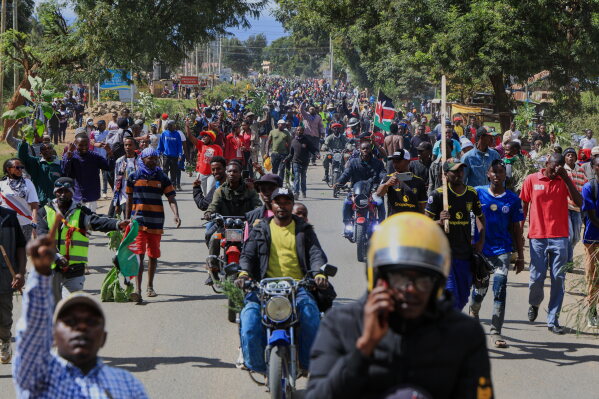
Hundreds of residents in Nanyuki, Laikipia County, Kenya, poured into the streets on Monday in a major protest against plans to establish a U.S.-backed Ebola quarantine facility at the Laikipia Air Base, bringing traffic to a standstill and heightening tensions in the normally quiet central Kenyan town. The demonstrations saw protesters block roads, burn makeshift barricades, blow whistles, and march toward the military installation while demanding the immediate cancellation of the project.
The proposed 50-bed facility is intended to house and monitor American citizens exposed to Ebola during the ongoing outbreak in Central and East Africa. U.S. officials say the center would accommodate individuals who have been exposed to the virus but are not yet showing symptoms. The initiative forms part of a broader emergency response effort supported by Washington, which has pledged approximately $13.5 million toward Kenya’s Ebola preparedness measures.
The protests erupted just days after Kenya’s High Court temporarily suspended the establishment of the facility and barred the arrival of any foreign patients pending the hearing of a legal challenge filed by the Law Society of Kenya and constitutional rights groups. The petitioners argue that Kenya’s healthcare system remains vulnerable and that hosting potentially exposed foreign nationals could place citizens at unnecessary risk.
Despite the court order, residents reported seeing increased military activity around the air base over the weekend. Witnesses observed aircraft movements and heightened security along roads leading to the facility, fueling public fears that preparations were continuing despite the legal suspension.
Television footage and images from the protests showed large crowds gathered near the air base gates, with security personnel, anti-riot police officers, and military vehicles deployed around the installation. Some protesters carried placards accusing the government of endangering local communities, while others chanted anti-Ebola slogans and called for the project to be abandoned entirely.
One of the protest organizers, Patrick Wahome, told news men that residents feared that any Ebola-related incident at the facility could have devastating consequences for the community. “Nanyuki is a small town. Military personnel working at the base live among us, and our children attend the same schools,” he said, arguing that an outbreak would affect the entire community.
Local leaders have also voiced strong opposition to the project. Laikipia Governor Joshua Irungu warned that locating the quarantine center in Nanyuki could expose residents to unnecessary health risks, noting that many local workers are employed within the air base and surrounding facilities.
Business owners reported suffering losses as the unrest disrupted commercial activities. Several shops remained closed throughout the day as demonstrators occupied key roads and public spaces. Some residents expressed concern that the controversy could negatively affect tourism and investment in the region.
The dispute comes amid growing concern over the spread of the Bundibugyo strain of Ebola in the Democratic Republic of Congo and neighboring Uganda. Health authorities have reported hundreds of confirmed and suspected cases in the region, prompting international efforts to strengthen containment measures. Kenya, however, has not recorded any Ebola cases during the current outbreak.
Kenya’s Health Cabinet Secretary, Aden Duale, has defended the project, stating that the proposed facility is intended to strengthen the country’s emergency response capacity and would serve broader public health objectives rather than exclusively American interests. Nevertheless, opposition from residents, civil society groups, medical professionals, and local leaders continues to mount.
With the court set to further consider the matter in the coming days, Nanyuki remains on edge as residents insist they will continue demonstrations until the proposal is permanently withdrawn. Protesters have vowed to sustain pressure on both the Kenyan and U.S. governments, arguing that public safety must take precedence over international health arrangements.