A peaceful protest demanding mandatory real-time electronic transmission of election results turned chaotic on Tuesday, February 17, 2026, when security operatives, believed to be from the Nigeria Police Force, deployed tear gas on demonstrators gathered outside the National Assembly complex in Abuja.

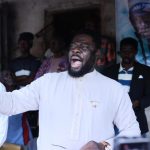
Among those affected was a prominent Christian leader, Prophet Isa El-Buba, General Overseer of the Evangelical Bible Outreach Ministries International (EBOMI) in Jos, Plateau State. The clergyman, who had recently returned from the United States, was visibly distressed in videos circulating online, where he condemned the use of force against citizens exercising their democratic rights.
The demonstration is part of a sustained push by civil society groups, youth activists, and concerned Nigerians for comprehensive electoral reforms ahead of the 2027 general elections. Protesters are specifically calling for the inclusion of mandatory real-time electronic transmission of results in the Electoral Act Amendment Bill, 2026 — a provision they argue is essential to curb manipulation during collation and ensure votes truly count.
The tension escalated following recent developments in the National Assembly:
- The Senate had reconvened in an emergency plenary to revisit Clause 60(3) of the bill.
- A motion by Senate Chief Whip Senator Tahir Monguno sought to weaken the clause by removing “real-time,” replacing “transmission” with “transfer,” and retaining manual collation as a backup.
- This move drew sharp criticism from reform advocates, who view electronic transmission as a non-partisan safeguard against rigging at collation centres — a recurring issue in past elections, including 2023.
Civil society organisations, including the Nigeria Civil Society Situation Room and ActionAid Nigeria, along with activists, had been protesting at the National Assembly gates since early February. The group briefly suspended demonstrations last week after receiving assurances from lawmakers but resumed on Tuesday to present a formal petition.
Demonstrators, mostly youths, maintained a peaceful stance outside the complex while presenting their demands. However, tensions rose when some protesters attempted to scale the fence or force entry following the arrival of key figures. Security forces responded by firing tear gas canisters, causing panic as thick smoke engulfed the area. Videos shared on platforms like X (formerly Twitter) and Instagram show protesters running, coughing, and scrambling for safety.
Prophet Isa El-Buba, who joined the protest, was directly impacted. In a widely shared three-minute video posted on his verified social media accounts, he said emotionally:
“I was tear-gassed at the National Assembly, in my own country, for what reason??? I just came back from the United States… Imagine Nigerians in a peaceful demonstration, and you are pumping tear gas on them? These young people are standing for the future of this nation, and all they are asking for is for their voices to be heard. A simple request by citizens… they should have listened, not threatened them.”
He drew a pointed comparison: “I was not tear-gassed when I demanded to talk with American congressmen, they listened. Why should Nigerians making their presentation here be treated this way?”
Other participants included activist and former presidential candidate Omoyele Sowore, former Minister of Youth and Sports Solomon Dalung, and reports of former Rivers State Governor Rotimi Amaechi showing solidarity (though he was noted in some accounts as supporting the objectives). Prominent voices like Randy-Peter Akah also spoke out, emphasizing: “Our vote must count. We want mandatory, real electronic transmission of results.”
No serious injuries were widely reported, though many suffered temporary effects from the tear gas.
The House of Representatives quickly addressed the controversy. In a press statement issued on Tuesday evening, the Office of the House Spokesman expressed “concern” over the alleged use of tear gas and announced plans to investigate the incident, review security conduct at the National Assembly, and reaffirm the constitutional right to peaceful assembly and protest.
The development has sparked widespread outrage online, with many Nigerians questioning why a peaceful call for transparent elections was met with force. It also highlights deepening public distrust in the electoral process and the urgency of reforms to restore confidence ahead of 2027.
As the National Assembly continues deliberations on the Electoral Act Amendment — with harmonisation between Senate and House versions still pending — protesters have vowed to sustain pressure until mandatory real-time electronic transmission is enshrined in law without loopholes.
This incident underscores the high stakes of Nigeria’s electoral future: whether the country will embrace technology-driven transparency or risk repeating past controversies that have undermined democratic gains.
This report is compiled from multiple eyewitness videos, statements by Prophet Isa El-Buba, official House of Representatives releases, and coverage by reputable Nigerian media outlets including Daily Post, Legit.ng, Punch, and FIJ.