Ethiopia launches $12.5B Africa’s biggest airport project

Air travel between African cities often requires passengers to connect through hubs outside the continent, such as London, Paris, or Dubai, underscoring persistent gaps in direct intra-African connectivity. A major new infrastructure project in Ethiopia aims to address this challenge by significantly expanding the continent’s aviation capacity.
The Ethiopian government has launched construction of a new $12.5 billion airport, known as Bishoftu International Airport, located about 30 miles southeast of Addis Ababa. Groundbreaking began in January, and Prime Minister Abiy Ahmed Ali described it as the largest aviation infrastructure project in Africa’s history.
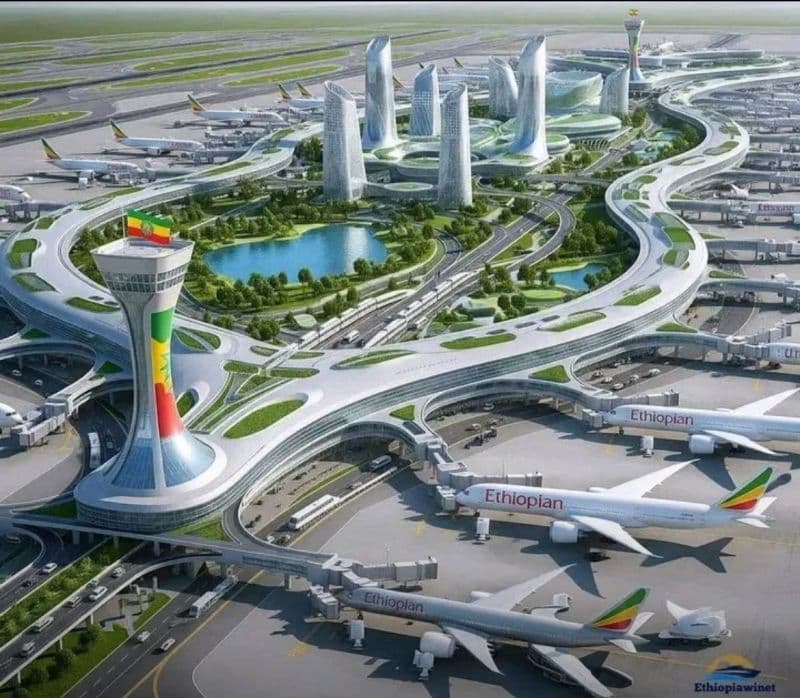
Bishoftu International Airport prototype: Photo courtesy Archup
The airport is expected to open in 2030 with two runways and an initial annual capacity of 60 million passengers. Long-term expansion plans aim to increase capacity to 110 million passengers, which would exceed the current traffic levels of Hartsfield-Jackson Atlanta International Airport, the world’s busiest airport, which handled approximately 106 million passengers in 2025.
The project is being led by Ethiopian Airlines, Africa’s largest airline by fleet size, passenger numbers, and revenue. CEO Mesfin Tasew stated that the airline will directly fund about 30% of the project’s cost, while the remaining $8 billion is still being negotiated with international partners, including the United States, China, and Italy.
Addis Ababa already serves as a key aviation hub on the continent, but Bole International Airport is nearing its operational limits and lacks room for further expansion. The new airport is designed primarily to serve transit passengers, positioning Ethiopia as a central connector for African air travel—a market experiencing rapid growth.
In addition to passenger traffic, the airport is expected to strengthen cargo logistics. With planned capacity to handle 3.73 million tons of freight annually, the project could support trade under the African Continental Free Trade Area, which seeks to boost economic integration across Africa.
According to Landry Signé of the Brookings Institution and Arizona State University, African airlines are currently experiencing the fastest growth in freight demand globally, with increases of 15–16% year-over-year compared to a global average of 5.5%. However, he emphasized that the airport’s success will depend on supporting infrastructure such as roads, rail systems, reliable power supply, and efficient customs operations.
Financing remains a key challenge. While progress has been made, raising the remaining $8 billion within a short timeframe could be difficult. Delays in funding could jeopardize the goal of completing the first phase by 2030.
Project planners have emphasized sustainability features, including the use of locally sourced materials, solar energy systems, and water management designed to support surrounding wetlands. However, aviation as a sector continues to contribute approximately 2–3% of global carbon emissions.
The development has also sparked controversy. Reports indicate that more than 15,000 people have been displaced from roughly 9,000 acres of farmland to make way for construction. Ethiopian Airlines says it has allocated $350 million for resettlement efforts, including building 1,400 homes with access to electricity, water, schools, and healthcare services.
Despite these commitments, some displaced residents have told local media they have not received compensation or alternative housing. Local authorities have disputed those claims.
Read Also:
549
Comments are closed

Stay Updated!

Subscribe to get the latest blog posts, news, and updates delivered straight to your inbox.

By pressing the Sign up button, you confirm that you have read and are agreeing to our Privacy Policy and Terms of Use

Recent Posts: