By Lamine Sarr, Dakar
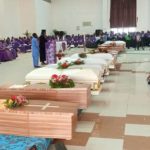
The death of a young medical student during violent clashes at Cheikh Anta Diop University (UCAD) this week has ignited widespread outrage, underscoring the escalating frustrations of Senegal’s youth with a government they played a pivotal role in electing. Abdoulaye Ba, a second-year medical student, succumbed to severe head injuries on February 9, 2026, following unrest sparked by prolonged delays in government stipends, a chronic issue that has plagued the nation’s higher education system for years.
The incident unfolded amid intensifying protests that began in early December 2025 at UCAD, West Africa’s largest university with an enrollment of around 80,000 students. Students, many from low-income backgrounds, rely heavily on monthly government bursaries averaging 40,000 CFA francs (about $73 USD) to cover basic needs like food and housing. However, payments have been erratic, with delays sometimes extending up to 13 months, leaving students in financial distress and prompting repeated disruptions to the academic calendar. Tensions boiled over when university authorities shuttered campus cafeterias after students boycotted meal payments in protest, exacerbating hunger and anger on campus.

Eyewitness accounts and social media footage paint a chaotic scene on the night of February 9. Videos showed flames and thick smoke billowing from a four-story student dormitory as panicked residents fled, some leaping from windows to escape the blaze. The aftermath revealed scorched vehicles, makeshift barricades, and debris scattered across the grounds. According to Cheikh Atab Sagne, president of the Student Association of the Faculty of Medicine, Pharmacy, and Dentistry, Ba was not an active participant in the demonstrations but was allegedly beaten severely by police officers who entered his room. Multiple students corroborated this claim, accusing security forces of “brutal torture.” Ba was rushed to a nearby hospital but died from his injuries shortly after.
In response, Senegalese authorities swiftly closed the UCAD campus on February 10, evacuating thousands of students and suspending classes indefinitely to restore order. The government issued a vague statement attributing Ba’s death to “serious events” without elaborating. Interior Minister Mouhamadou Bamba Cissé, addressing a news conference, acknowledged violence from both protesters and security forces, pledging a thorough investigation and offering condolences to Ba’s family. During the briefing, unverified footage was shown of a student hurling a Molotov cocktail, suggesting mutual aggression in the clashes.
Human rights organizations, including Amnesty International Senegal, have sharply criticized the response, issuing a joint statement denouncing the “disproportionate use of force by police.” This condemnation echoes longstanding concerns about police impunity in Senegal, where similar incidents have occurred in the past. Social media has amplified the outcry, with hashtags like #JusticeForAbdoulayeBa trending and videos of alleged police brutality circulating widely, potentially stoking further unrest.
This tragedy is not an anomaly but part of a recurring pattern of student-led protests in Senegal, where UCAD’s academic year has been disrupted for extended periods—sometimes exceeding nine months—due to strikes over stipends, infrastructure deficits, and broader socioeconomic grievances. Dating back to the 1990s, these disruptions stem from chronic underfunding of public higher education, despite Senegal’s status as a regional educational hub. Under former President Macky Sall’s administration (2012–2024), similar clashes claimed lives, such as the 2018 killing of a student during stipend protests, which triggered nationwide strikes. These events fueled anti-government sentiment, culminating in deadly unrest during the 2024 presidential election cycle, with up to 1,000 arrests and dozens of fatalities.
The political landscape shifted dramatically in March 2024 when Bassirou Diomaye Faye, a 44-year-old political outsider backed by popular opposition figure Ousmane Sonko, won a landslide victory. Faye’s campaign resonated with Senegal’s youth—comprising over 60% of the population—promising a “rupture” from corruption, renegotiated resource contracts, and solutions to rampant unemployment (estimated at 20-30% among young people). Yet, nearly two years into his term, these pledges remain largely unmet. An audit uncovered a staggering $13 billion hidden debt from the prior regime, one of Africa’s most severe fiscal crises, forcing austerity measures that delayed payments across sectors, including education.
Senegal’s economy, buoyed by oil and gas exports since 2023, has grown at 5-8% annually, but benefits have not trickled down amid inflation, global shocks like the Ukraine war, and post-COVID recovery challenges. For students, stipend delays symbolize broader betrayal: “Thirteen months without scholarships means thirteen months of our lives on hold,” one protester lamented in December 2025. This disillusionment mirrors trends across Africa, where youthful populations demand accountability from leaders, often leading to migrations or uprisings.
As the investigation unfolds, the incident threatens to erode Faye’s support base, with youth movements that propelled him to power now voicing betrayal. If unaddressed, it could spark wider demonstrations, challenging Senegal’s reputation as a stable West African democracy.