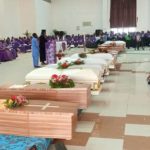
The recent incident at St. Peter’s Anglican Church of Kenya (ACK) in Witima (also referred to as Wairima), Othaya, Nyeri County—where police allegedly lobbed teargas into the church during a Sunday service on January 25, 2026, disrupting worship and endangering congregants including children and the elderly—has been described by human rights groups and church leaders as part of a broader, disturbing pattern of police interference in places of worship in Kenya.
The National Council of Churches of Kenya (NCCK), in response to the Nyeri event, highlighted at least nine similar cases since 2020 where police used teargas or other disruptive tactics during ongoing church services. These incidents often involve excessive force, violations of police guidelines, and disregard for the sanctity of worship spaces, frequently linked to political tensions, protests, or opposition gatherings.
Here are some documented similar incidents cited by NCCK and other reports:
- October 4, 2020: Police lobbed teargas at the African Independent Pentecostal Church of Africa (AIPCA) in Kenol, Murang’a County, during an active worship service.
- July 16, 2024: Police disrupted a prayer service at Chosen Generation Church in Nakuru, claiming they were pursuing demonstrators in the area.
- July 25, 2024: Teargas was deployed at congregants in the compounds of All Saints’ Cathedral (ACK) and the Holy Family Basilica (Catholic) in Nairobi.
- January 1, 2025: Teargas canisters were released inside the Pentecostal Evangelistic Fellowship of Africa (PEFA) Church in Miharati, Nyandarua County, during a New Year vigil.
- July 20, 2025: Police used teargas at the Africa Inland Church (AIC) in Subukia, Nakuru County, targeting worshippers leaving a service.
- November 30, 2025: Teargas was deployed near the Presbyterian Church of East Africa (PCEA) Kariobangi North in Nairobi, disrupting an ongoing worship service.
- January 11, 2026: Police used teargas in and around the AIPCA Church at Kiamworia in Kiambu County.
- January 25, 2026: The Nyeri incident at ACK Witima Parish (the event in question), involving teargas and reports of live ammunition, amid claims it targeted former Deputy President Rigathi Gachagua and his supporters.
These cases span counties including Murang’a, Nakuru, Nairobi, Nyandarua, Kiambu, and Nyeri. Church bodies like the NCCK and human rights organizations (including KNCHR and KHRC) have repeatedly condemned them as violations of constitutional rights to freedom of worship (Article 32), peaceful assembly (Article 37), and security of the person (Article 29). They argue that using teargas or force in or near churches is unjustifiable, often contravenes court orders or police protocols, and reflects rising political intolerance—especially in periods of heightened electoral competition.
In the wake of the January 2026 Nyeri attack, calls have intensified for investigations, prosecutions, officer suspensions, public apologies from authorities like the Interior CS and Inspector General of Police, and stronger safeguards for places of worship. President Ruto has directed security agencies to protect churches from political misuse, though critics question enforcement given the pattern.
While older historical attacks (e.g., terrorist incidents like the 2012 Garissa church shootings by gunmen) differ in nature, the recent trend focuses on state actors disrupting services rather than external threats.