Kojo Mensah reports from Cotonu
Polls closed Sunday in Benin’s presidential election, as voters in the West African nation selected a successor to outgoing President Patrice Talon, who completed his second and final five-year term after a decade in power. Talon, who took office in 2016, is constitutionally barred from seeking re-election.
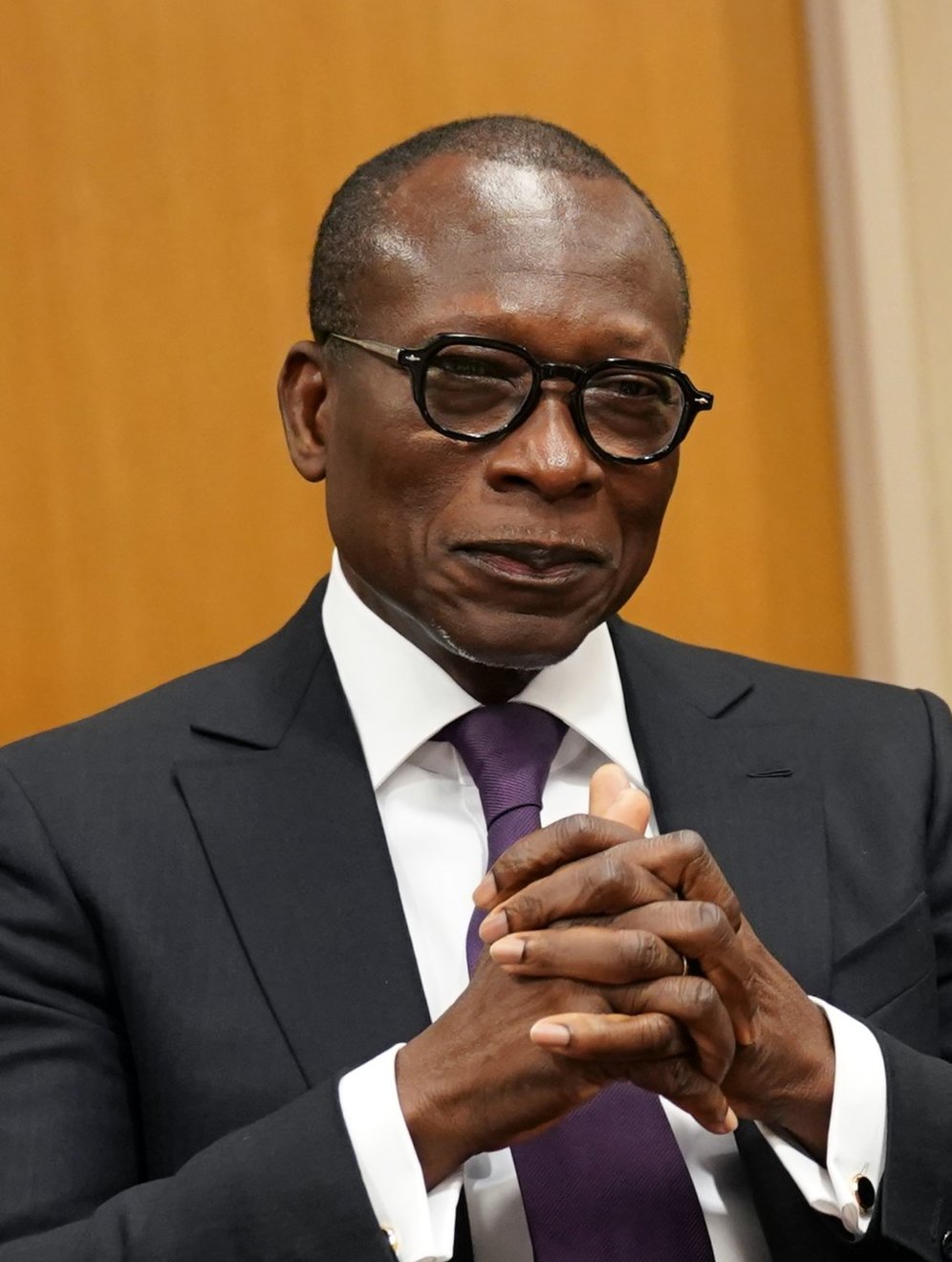
The leading candidate is Romuald Wadagni, the 49-year-old Finance Minister and standard-bearer of the governing coalition (comprising the Progressive Union for Renewal and the Republican Bloc). Wadagni, endorsed by Talon, faces Paul Hounkpè of the Cowry Forces for an Emerging Benin (FCBE), the only approved opposition candidate. Nearly 8 million voters (registered total: approximately 7.9 million) were eligible to cast ballots at more than 17,000 polling stations.
Benin’s population stands at roughly 14.5–15 million as of 2025–2026, with a young demographic typical of sub-Saharan Africa (median age around 18). Vote counting began shortly after polls closed at 4 p.m. local time, with provisional results expected within 48 hours. A candidate needs an absolute majority (over 50%) to win in the first round; otherwise, a runoff would follow.
Turnout in recent Beninese elections has often been modest—in the 2021 presidential vote it was about 51%—and early reports from Cotonou, the economic capital and largest city, indicated sparse attendance at many polling stations on Sunday morning. The city remained calm, with stores and streets open, though public demonstrations were banned on election day as per electoral rules.
Analysts widely view Wadagni as the strong favorite. This follows the January 2026 parliamentary elections, in which the two ruling coalition parties secured all 109 seats in the National Assembly after opposition parties, including the Democrats (Les Démocrates), failed to meet the 20% threshold required in every electoral constituency to win seats. Parliamentary turnout was low at around 37%. Critics argue that recent electoral code changes—including higher thresholds, sponsorship requirements, and party registration rules—have narrowed political competition and favored the incumbent bloc.
Hounkpè stated after voting that he would accept the results if the process proved transparent and fair. Renaud Agbodjo, leader of the main opposition Democrats party, was disqualified from the presidential race after failing to secure the necessary parliamentary and local endorsements—a requirement opponents say was designed to limit challengers. Similar endorsement barriers and court rulings have been cited by human rights groups and opposition figures as contributing to a shrinking democratic space.
Wadagni has highlighted Benin’s economic performance during his decade as finance minister. The economy grew at 7.5% in 2024—one of the strongest rates in West Africa—driven by services, industry, infrastructure projects (including the Glo-Djigbé Industrial Zone), and agriculture. Growth is projected to remain robust, averaging around 6–7% in the near term, though challenges persist, including poverty rates (around 36% recently, with gradual declines) and high informal employment.
Talon said on election day that he was stepping down with the sense of having advanced the country in multiple areas. “Whatever the outcome of the vote, Benin has reached a milestone in its history,” he remarked.
Benin has long been regarded as one of West Africa’s more stable and democratic countries, with regular elections and peaceful power transfers. However, during Talon’s tenure, opposition leaders and international human rights organizations have accused the government of using the judiciary to sideline critics through arrests, disqualifications, and legal proceedings—claims the authorities deny, framing them as necessary for stability and anti-corruption efforts.