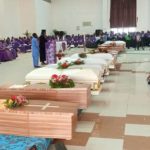
A wave of anger and renewed debate over security has swept across Nigeria following deadly attacks in parts of the country’s north during the 2026 Easter period, with prominent preacher, Apostle Michael Orokpo, head Pastor of Encounter Jesus Ministries International, calling on citizens to embrace both spiritual and physical self-defense.
At least 26 people have been killed in a series of coordinated attacks across northern Nigeria during the 2026 Easter period, deepening national outrage and reigniting debate over security and self-defense.
The violence, confirmed by military sources and local officials, affected multiple states across the region. In the deadliest incident, at least 17 people were killed on Saturday when armed men stormed the Mbalom community in Gwer West Local Government Area of Benue State, a region that has frequently experienced deadly clashes and armed raids.

In a separate attack the same day, four police officers were killed following a prolonged gun battle at a police headquarters in Borno State. Authorities said the assault was carried out by fighters linked to Islamic State West Africa Province, an extremist group that has intensified operations in Nigeria’s northeast in recent years.
Earlier, on Easter Sunday, gunmen attacked a church service in Ariko village in Kaduna State, killing at least five worshippers. According to the Nigerian army, the attackers attempted to abduct dozens of people but were forced to flee after troops responded to a distress call, preventing the kidnapping of 31 individuals.
Amid the grief and anger, Nigerian preacher Apostle Michael Orokpo delivered a fiery message that has since gone viral, urging citizens not only to rely on prayer but also to take responsibility for their safety.
“The time has come not only to pray, but to rise up,” he said, emphasizing that self-defense is not a crime and that individuals must be prepared both spiritually and physically in the face of persistent attacks.
Orokpo also criticized the government, arguing that leadership should be measured by results rather than political rhetoric. His comments reflect growing frustration among Nigerians who feel increasingly vulnerable amid recurring violence.
Northern Nigeria continues to face overlapping security challenges, including insurgency by Boko Haram, attacks by Islamic State West Africa Province, and widespread banditry.
While authorities have made efforts to contain these threats, attacks on communities, security facilities, and religious gatherings persist, often with devastating consequences.
The latest Easter violence highlights both the geographical spread and the evolving tactics of armed groups—from village raids to direct assaults on security installations.