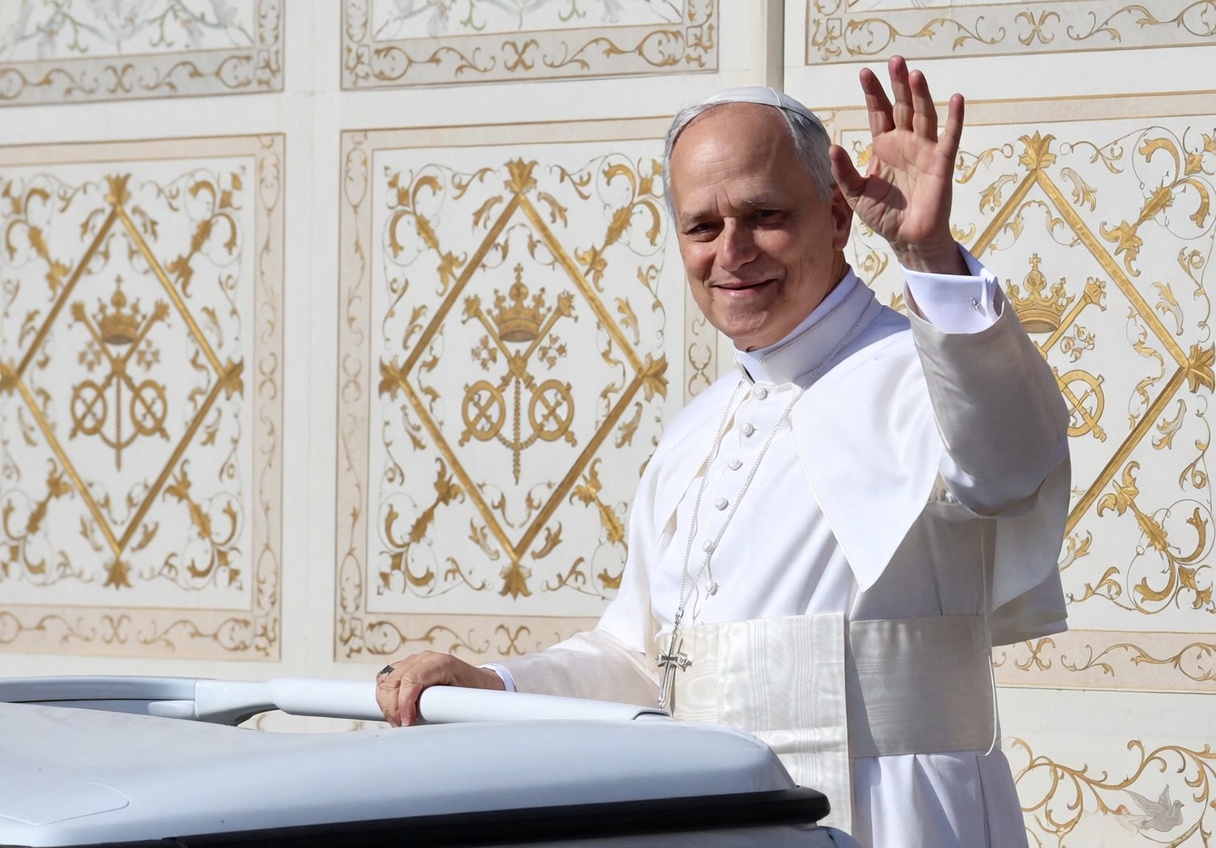
Pope Leo XIV has embarked on a significant 10-day tour of Africa, marking the first major international trip of his papacy that clearly reflects his personal priorities. The journey, running from April 13 to 23, will take him across four countries: Algeria, Cameroon, Angola, and Equatorial Guinea, highlighting a continent that has become central to the future growth of the Catholic Church.
Africa is now one of the fastest-growing regions for Catholicism, with roughly one in five Catholics worldwide residing there. The Church also plays a crucial role across the continent, not only in spiritual life but in education, healthcare, and conflict mediation, often stepping into gaps left by weak state institutions.
A major theme of the pope’s visit is interfaith dialogue, particularly relations between Christians and Muslims. This is especially evident in his first stop, Algeria, a Muslim-majority nation with a small but historically significant Christian presence. Christianity in Algeria dates back to the early centuries of the Church and produced influential figures like Saint Augustine of Hippo, whose legacy remains central to Catholic theology.
The trip comes at a time of heightened global tensions, particularly in the Middle East. Pope Leo XIV has recently spoken against the use of religion to justify war, positioning himself as a moral voice for peace. His stance contrasts with rhetoric from some political leaders. In response, Leo emphasized that his comments are rooted in Gospel principles rather than political opposition.
During his visit to Algeria, the Pope called for renewed respect for human dignity and warned against modern forms of exploitation, including what he described as “neocolonial tendencies.” His message reflects broader concerns about inequality, foreign influence, and instability affecting many African nations.
Beyond Algeria, the Pope’s itinerary focuses on regions facing social and political challenges. In Cameroon, he is expected to address the long-running Anglophone crisis, a conflict between English-speaking separatists and the predominantly French-speaking government that has claimed thousands of lives since 2017. His visit to Bamenda, a key flashpoint, underscores his role as a potential mediator encouraging dialogue and reconciliation.
In Angola, the pope will visit Saurimo, a center of the country’s diamond industry. While diamonds are a major source of national revenue, the sector has faced criticism over environmental damage and labor conditions. Given Leo’s emphasis on environmental stewardship, this stop may amplify his calls for ethical resource management and protection of vulnerable communities.
Throughout the trip, Pope Leo XIV is expected to engage directly with local populations, celebrating large open-air masses, visiting hospitals and prisons, and meeting with religious and community leaders. His approach reflects a broader vision of the Church as a “bridge-builder,” fostering peace across cultural, religious, and political divides.