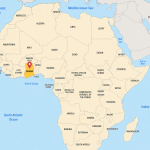
In a significant step to deepen bilateral security cooperation, the United States has deployed a small team of military personnel to Nigeria, U.S. Africa Command (AFRICOM) confirmed this week. The move represents the first official acknowledgment of American forces on Nigerian soil since U.S. airstrikes targeted militant positions in the country’s northwest on Christmas Day 2025.
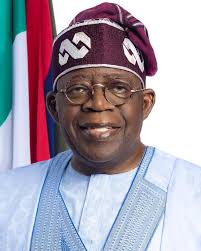
AFRICOM Commander General Dagvin R.M. Anderson announced the deployment during a press briefing, describing it as a direct outcome of heightened collaboration between Washington and Abuja. He linked the decision to discussions late last year with Nigerian President Bola Tinubu in Rome, where both sides agreed that additional measures were needed to address the persistent terrorist threat in West Africa.
“That has led to increased collaboration between our nations, to include a small U.S. team that brings some unique capabilities from the United States in order to augment what Nigeria has been doing for several years,” General Anderson stated. He did not disclose the exact number of personnel, their precise arrival date, basing locations, or detailed mission scope, emphasizing instead the team’s role in providing specialized support to Nigerian forces.
Nigeria’s Defense Minister, General Christopher Musa, has confirmed the presence of the U.S. team, characterizing it as a training and advisory element aimed at enhancing the readiness of Nigerian troops for operations against armed groups. The minister provided no further specifics on the deployment’s parameters.
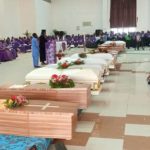
The development builds on escalating U.S.-Nigeria military ties amid Nigeria’s long-running battle against jihadist insurgents, primarily Boko Haram and the Islamic State West Africa Province (ISWAP). These groups have operated in the northeast and northwest regions for over 15 years, conducting attacks, kidnappings, and territorial seizures that have killed tens of thousands and displaced millions. The conflict has roots in socioeconomic grievances, governance failures, and ethnic tensions, though it has often been framed internationally through religious lenses.
The deployment follows U.S. airstrikes on December 25, 2025, which targeted suspected Islamic State-linked sites in Sokoto State—coordinated with Nigerian authorities—and marked a direct American combat involvement on Nigerian territory. Prior to the strikes, U.S. surveillance flights over Nigeria from neighboring Ghana had been reported since at least late November 2025, providing intelligence support.
The renewed partnership comes against a backdrop of heightened U.S. attention to religious freedom concerns in Nigeria. In late 2025, President Donald Trump designated Nigeria as a “Country of Particular Concern” under the International Religious Freedom Act and publicly threatened military action, including potential ground operations, over what he described as the “genocide” of Christians by militants. Trump accused the Nigerian government of failing to adequately protect Christian communities, particularly in the north-central and northwestern regions where attacks by Islamist extremists and herder-farmer clashes have claimed many lives.
Nigerian officials, including Foreign Minister Yusuf Tuggar, have consistently rejected characterizations of the violence as religiously targeted genocide, arguing that militants often attack indiscriminately across communities and that the primary victims in many cases include Muslims. Experts and human rights organizations have noted that while Christians have faced severe persecution—especially in areas affected by Boko Haram and ISWAP—the conflict’s drivers are multifaceted, involving resource competition, poverty, and weak state authority rather than purely sectarian motives.
The U.S. deployment appears focused on capacity-building, intelligence sharing, and advisory roles rather than direct combat, aligning with AFRICOM’s broader “by, with, and through” approach to partner nations leading counter-terrorism efforts. It signals a pragmatic shift toward joint operations against shared threats like ISWAP and Boko Haram, even as diplomatic tensions over religious freedom persist.
This small-scale presence underscores ongoing U.S. strategic interests in stabilizing West Africa, countering violent extremism, and supporting a key regional power. Both governments have framed the cooperation as mutually beneficial, aimed at long-term security gains without compromising Nigerian sovereignty. Details on the team’s duration and potential expansion remain limited, but the announcement highlights a maturing security alliance in a region plagued by instability.